A good wall should keep water out, but even if it does a perfect job of preventing liquid water from entering, water vapor will exist inside the wall assembly as the temperature and pressure change. If water vapor inside the wall assembly condenses, it will damage the structure. To protect the integrity of your home, the wall must be built in a way that allows water vapor to escape.
Water vapor can exit a home by diffusing (escaping through vents) or by condensing on a surface that directs the water outside. Either way, the water needs an escape route.
The Vapor profile of a wall describes the wall’s drying direction and potential. The profile indicates which layers get wet and how they can dry. Drying can occur on either side of vapor barriers. Vapor barriers are the least permeable materials in a wall system and are designed to prevent water vapor from passing through them. Vapor barriers should be placed strategically to keep the ‘dry zone’ dry while avoiding trapping moisture between any two layers. Building Sciences provides more information on the permeability of siding materials, types of insultion used in walls, and other common building materials, Take a quick glance at their table of building materials and permeability.
Fig. 1 Fig. 2
(images via Building Sciences: vapor profiles determine whether or not a wall can dry)
Fig. 1 shows a wall assembly that traps water vapor. Fig. 2 shows an example of a wall assembly that allows drying in each direction.
A vapor barrier located on the inside of a wall prevents inward drying (Fig 1) while a vapor barrier located on the outside of a home would prevent outward drying. In general, water vapor moves from the warm side of a building to the cold side, so vapor barriers should be placed accordingly. A place like Connecticut gets tricky because the warm side and the cold side switch places as the seasons change. In the winter, condensation tends to occur on the interior side of the exterior wall. In the summer, condensation tends to occur on the exterior side of the interior wall where it can get trapped inside by things like vinyl wall coverings, as in figure 1, above.
General Rules To Follow
- Avoid placing vapor barriers on opposing sides of a wall assembly or else water vapor cannot escape in either direction and the structure could mold or decay.
- A vapor barrier should not be applied on the inside of the drainage plane where it might interfere with the structure’s ability to dry both inwards and outwards from the control layers.
- Mechanisms that enable drying are more important than wetness prevention. Use the most permeable materials possible: if you can use a vapor retarder (defined as semi-permeable or semi-impermeable) rather than a vapor barrier (which is impermeable) do so!
- Air-conditioned buildings should not have vapor barriers on the interior portion of the wall assembly. Make sure that even the wallpaper is permeable!
- Siding materials such as weather-treated vinyl that are impermeable are acceptable because they are installed with many air gaps that allows water vapor from inside the wall system to escape to the outside atmosphere regardless of the permeability of the siding itself.
- Cladding that can absorb water, like brick, should be properly vented: See Figure Below
- This assembly allows drying in both diirections. A wall constructed in this manner could be built with a variety of siding materils. If the siding were vinyl, for example, you would not need to change anything. The only time this general profile would not work is if the siding or cladding were completely impermeable, and not vented, such as a home with stucco cladding.
Buildingscience.com shows the vapor profiles of many different wall configurations. Please refer to their website for more material on the subject
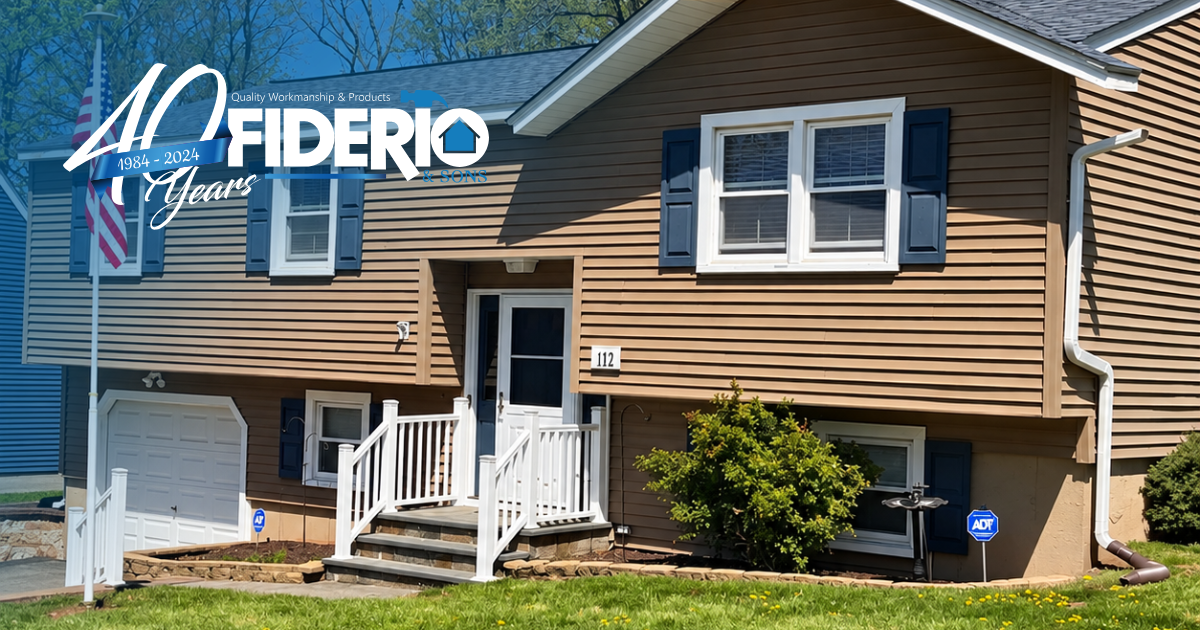
Choosing aesthetically appealing siding is usually a homeowner’s first priority when it comes to remodeling or choosing walls for an addition. At Fiderio, we install siding from Mastic Home Exteriors and CertainTeed. Both vendors offer a variety of color and material options: such as Mastics’s low maintenance “cedar” shakes and shingles. Traditional horizontal siding from CertainTeed comes in 40 different colors and a variety of finishes and styles. Even the insulated vinyl siding comes in 15 different color options! When you are finished with the fun part, just remember that the rest of the wall is important, too, especially if you want your snazzy siding to last. Ask your contractor about the materials and the vapor profile of your wall, especially in humid places like your bathroom! Have fun looking at the color swatches, run through our vinyl siding checklist, and give us a call when you are ready to move forward.