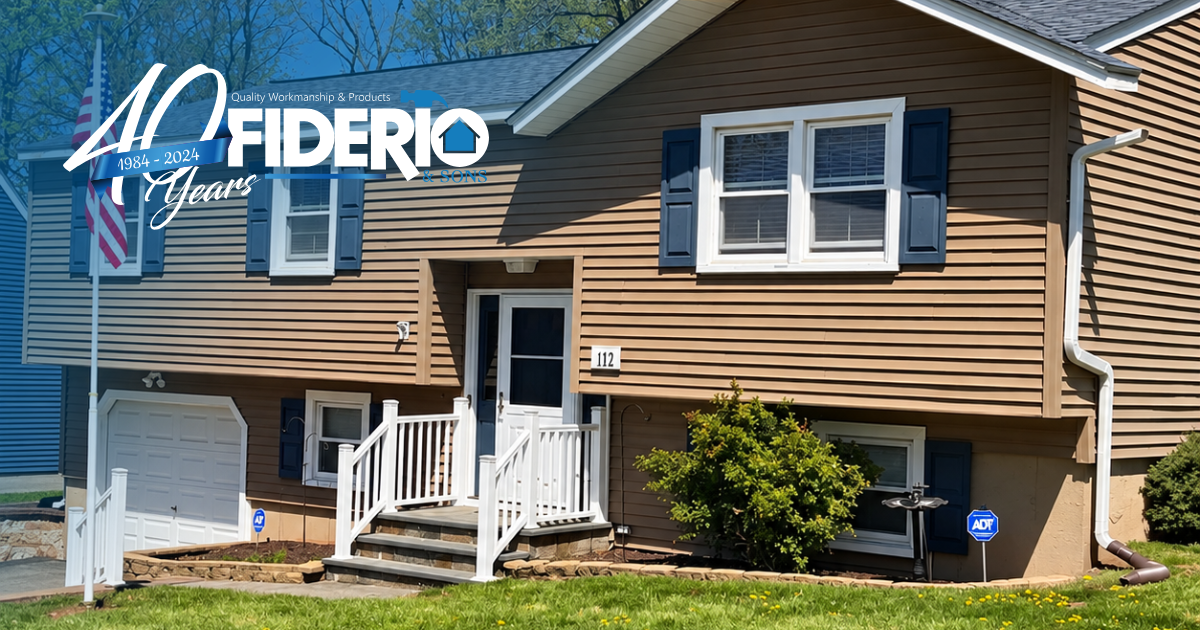

It is one of the most practical questions homeowners ask us, and one we heard again just this month from a family in South Meriden: our home needs new siding, the gutters and trim should probably go too, and the deck has seen better days. What order should the work happen in? Getting the sequence right protects the money you spend on each project, and getting it wrong can mean paying to repair brand new work. Here is how we sequence exterior projects at Fiderio and Sons, and why.
The Short Answer: Siding Before Gutters, Structure Before Finishes
As a rule, work that touches the walls of the house comes before work that hangs on the walls or sits against them. Siding and trim go up first. Gutters attach to the fascia after the siding and trim are complete, so they align cleanly and nothing has to be removed twice. A deck that attaches to the house is usually last, because siding crews need clear access to the wall, and building a beautiful new deck first just gives the siding crew something to work around and possibly scuff. If the roof also needs work, it comes before everything, which we cover in our guide to what to replace first when your home needs roofing, siding, and windows.
Why Siding Comes Before Gutters and Trim Details
Replacing siding means stripping the walls down and often addressing the layers underneath, including house wrap, flashing, and any hidden rot. Gutters and downspouts are mounted to the fascia and run down the finished wall, so installing them before the siding means detaching and rehanging them, and every extra removal risks bent hangers and misaligned pitch. Doing siding and trim as one phase also lets the installer integrate flashing and trim details properly, which is where most water problems start. Our post on vinyl siding installation and moisture control explains why those hidden layers matter so much in the Connecticut climate.
Where the Deck Fits In
If your deck is usable, as the South Meriden homeowners described theirs, it almost always makes sense to complete the siding phase first and build the deck second. A ledger mounted deck attaches directly to the house, and the connection point needs proper flashing that should be coordinated with the new siding, not cut into it afterward. Building the deck last also means the finished surface never doubles as a work platform for the siding crew. The exception is a deck that is unsafe. Structural safety always jumps the line, and a failing deck gets addressed before cosmetic work anywhere else on the house.
Can You Bundle It All Into One Project?
Yes, and there are real advantages to doing so. One contractor sequencing siding, gutters, trim, and the deck means one design conversation, coordinated colors and materials, one mobilization, and no finger pointing between trades if something needs adjusting. It also usually shortens the total calendar time compared with hiring each trade separately months apart. As a full service remodeler that has handled Connecticut exteriors for more than 40 years, this is exactly the kind of combined scope we plan every week.
Frequently Asked Questions
Should gutters be replaced at the same time as siding?
In most cases, yes. Gutters typically need to be removed during siding and fascia replacement, so if they are older or nearing the end of their lifespan, replacing them at the same time saves the cost of removing and rehanging them later. It also gives you the opportunity to match the gutter color and profile to your new exterior. If your existing gutters are still in excellent condition, they can often be removed and reinstalled.
Does a deck have to come off for siding replacement?
Not usually, but the area where the deck connects to the house requires careful attention. If the deck is attached with a ledger board, the siding, flashing, and weather barrier around that connection must be installed correctly to prevent water intrusion. An experienced contractor can often work around an existing deck, although a deck that is already due for replacement is usually best rebuilt after the siding project is complete.
What time of year is best for this kind of exterior work in Connecticut?
Siding, trim, gutters, and decks can be installed during most of the year in Connecticut, and each season has its advantages. Warmer months offer longer workdays and make it easier to schedule follow-up phases, while cooler months may provide more flexible scheduling. In most cases, planning the project properly matters more than the season, ensuring each phase flows into the next without unnecessary delays.
How long does a combined siding, gutter, and deck project take?
The timeline depends on the size of the home and the scope of the work, but combining everything into one project is usually faster than hiring separate contractors over several months. Materials can be ordered together, and each phase is scheduled to follow the previous one without long gaps. During the consultation, we provide a project timeline so you know what to expect before work begins.
Do I need separate quotes for each part of the project?
Not if you're working with a full-service exterior contractor. We evaluate your siding, gutters, trim, and deck during one visit and prepare a single proposal that covers the complete scope of work. This approach also helps coordinate design decisions across the project, such as matching deck materials, railing styles, gutter colors, and trim details to your new siding before materials are ordered.
Plan the Whole Exterior at Once
If your home in Meriden, Southington, or anywhere in central Connecticut needs siding, gutters, trim, or a new deck, the smartest first step is a single consultation that puts the whole exterior in order. Contact Fiderio and Sons to walk the project with us and get a sequenced plan for the work.